
Full Step-by-Step Guide: How to Validate a Foreign Pediatrician Diploma in Slovakia. Instructions, Links, and Historical Context
In March 2023, a historic breakthrough occurred in the healthcare legislation of the Slovak Republic: the recognition procedure for foreign pediatricians from non-EU countries was finally granted a clear and transparent legal framework. Prior to this reform, the Slovak healthcare system effectively blocked foreign pediatricians from practicing, despite a catastrophic staff deficit across the country.
The story behind this reform is a textbook example of how the unified efforts of public initiative, media advocacy, and legal action can overhaul obsolete regulations.
The story behind this reform is a textbook example of how the unified efforts of public initiative, media advocacy, and legal action can overhaul obsolete regulations.
One of Many: The Precedent That Transformed the System
Systemic reforms often begin with individual personal battles brought into the public spotlight. One such defining case was that of Dr. Viktoriia Dmytruk — a pediatrician with 25 years of clinical experience from Donetsk who fled the war, only to encounter a wall of bureaucratic obstruction in Slovakia.
The Ministry of Education of the Slovak Republic rejected Viktoriia’s diploma recognition application twice. Ministry officials maintained that her 6-year degree in "Pediatrics" obtained from Donetsk National Medical University was not equivalent to the Slovak degree program in "General Medicine" (Všeobecné lekárstvo).
The Ministry of Education of the Slovak Republic rejected Viktoriia’s diploma recognition application twice. Ministry officials maintained that her 6-year degree in "Pediatrics" obtained from Donetsk National Medical University was not equivalent to the Slovak degree program in "General Medicine" (Všeobecné lekárstvo).
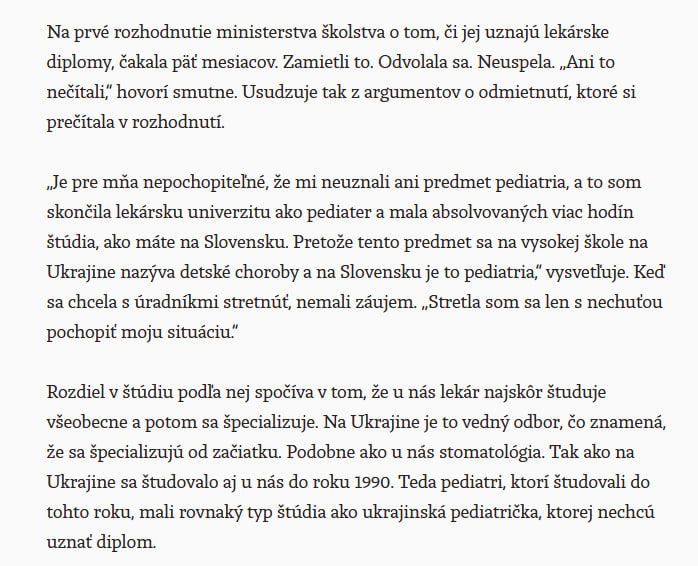
“She waited five months for the Ministry of Education’s initial decision on whether her medical degrees would be recognized. It was denied. She filed an appeal. To no avail. ‘They didn’t even read it,’ she says sadly. She comes to this conclusion based on the reasons for the denial she read in the decision.
“I don’t understand why they didn’t even recognize the subject ‘pediatrics,’ even though I graduated from medical school as a pediatrician and completed more hours of training than you do here in Slovakia. The thing is, this subject is called ‘childhood diseases’ at universities in Ukraine, but in Slovakia it’s called ‘pediatrics,’” she explains. When she tried to meet with officials, they showed no interest. “I encountered nothing but a reluctance to understand my situation.”
The difference in training, she says, is that in Ukraine, doctors first study a general medical curriculum and then specialize. In Ukraine, it’s a separate field of study, which means they specialize from the very beginning. Dentistry is structured similarly here. Until 1990, we followed the same system as in Ukraine. Thus, pediatricians who trained before that year underwent the same type of training as the Ukrainian pediatrician whose degree they refuse to recognize.”
Slovak media openly highlighted the sheer absurdity of the deadlock: "Our clinics are bleeding doctors, yet her credentials get rejected," reported Denník N.
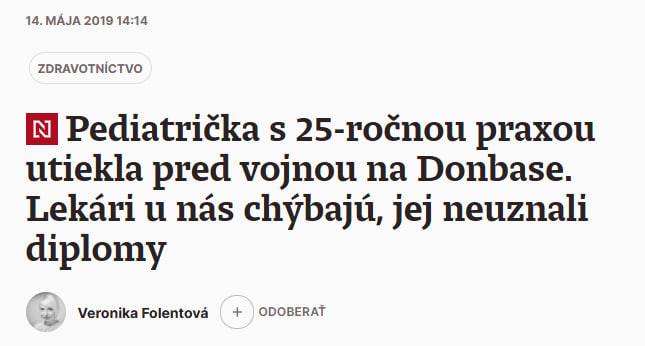
Source: Denník N
"We don't have enough doctors of our own, yet we turn outsiders away," summarized Pravda.
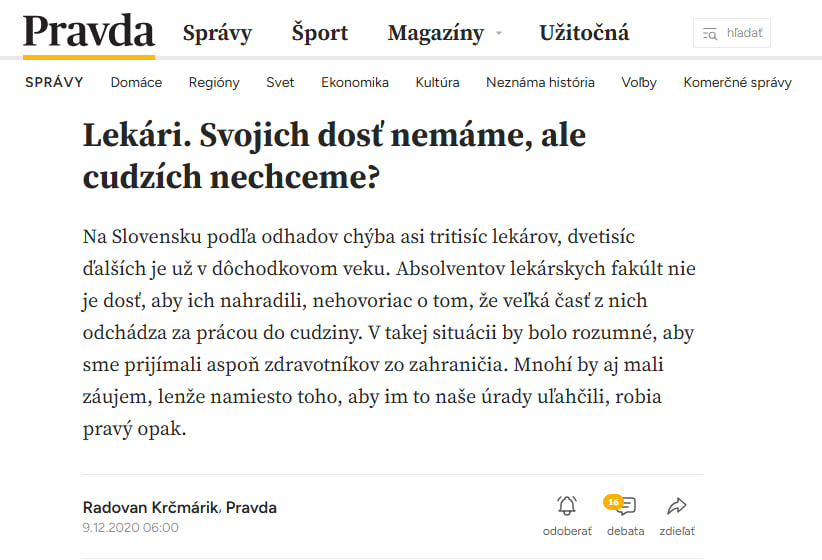
Source: Pravda
Having lived in Bratislava for over 8 years without the right to practice legally, Viktoriia looked into options in the neighboring Czech Republic. Czech authorities recognized her medical qualifications without artificial friction in just three months, allowing her to proceed smoothly into clinical practice.
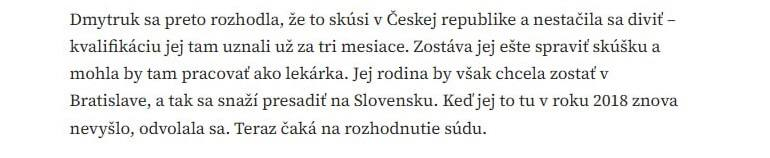
“Dmitruk decided to try her luck in the Czech Republic and was pleasantly surprised: her qualifications were recognized there in just three months. All she has to do now is pass an exam, and she’ll be able to work there as a doctor. However, her family would like to stay in Bratislava, so she is trying to make it work in Slovakia. When she was unsuccessful again in 2018, she filed an appeal. She is now awaiting the court’s decision.”
The Role of MALnS and Strategic Advocacy
Recognizing the national scope of the problem, Alona Kurotova, founder and acting chair of the International Association of Doctors and Medical Professionals in Slovakia (MALnS), intervened in Dr. Dmytruk’s case, turning it into the flagship precedent for a coordinated lobbying campaign.
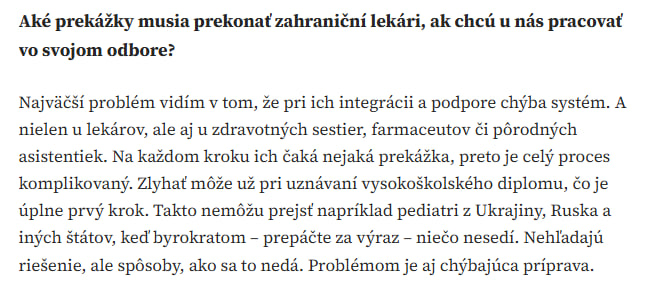
“What obstacles must foreign doctors overcome if they want to work here in their field?
I see the main problem as the lack of a system to support and integrate them. And this applies not only to doctors, but also to nurses, pharmacists, and midwives. At every turn, they face some kind of obstacle, which is why the whole process ends up being so complicated. Everything can come to a standstill as early as the stage of recognizing a higher education diploma—and that’s just the very first step. Because of this, pediatricians from Ukraine, Russia, and other countries, for example, are unable to qualify when bureaucrats—pardon my language—don’t like something. They aren’t looking for a solution; they’re looking for reasons why it can’t be done. The lack of training is also a problem.”
The Association retained legal counsel, secured backing from commercial partner firms to fund legal retainers and formal court appeals, and maintained active communication channels with government ministries.
In an interview with Pravda, Alona Kurotova highlighted the artificial nature of these regulatory roadblocks: "Obstacles lurk at every single step... Slovakia remains the only neighboring country entirely shutting out pediatric diplomas originating from third countries."
In an interview with Pravda, Alona Kurotova highlighted the artificial nature of these regulatory roadblocks: "Obstacles lurk at every single step... Slovakia remains the only neighboring country entirely shutting out pediatric diplomas originating from third countries."
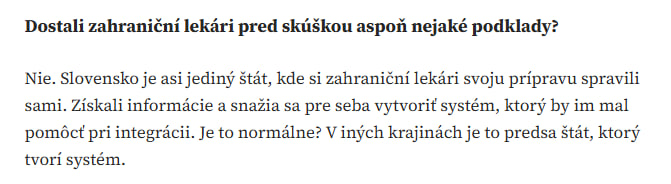
Source: Pravda
National Media Coverage
The crisis received prominent coverage from the national public broadcaster STVR (formerly RTVS):
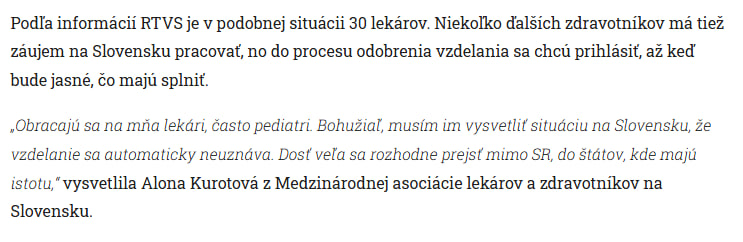
“According to RTVS, 30 doctors are in a similar situation. Several other healthcare professionals are also interested in working in Slovakia, but plan to apply for recognition of their education only once it becomes clear exactly what requirements they must meet.
“Doctors—often pediatricians—come to me for help. Unfortunately, I have to explain the situation in Slovakia to them—that their education is not automatically recognized. Quite a few decide to leave the Czech Republic for countries where they feel more confident,” explained Alena Kurotova of the International Association of Doctors and Healthcare Professionals in Slovakia.”
Source: STVR
Industry outlets such as Zdravotnícky denník:
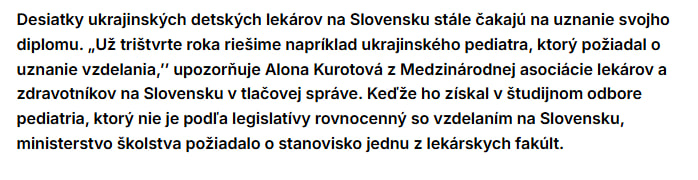
“Dozens of Ukrainian pediatricians in Slovakia are still waiting for their degrees to be recognized. ‘For three-quarters of a year now, we’ve been working on the case of, for example, a Ukrainian pediatrician who submitted an application for recognition of his education,’ notes Alena Kurotova of the International Association of Doctors and Healthcare Professionals in Slovakia in a press release. Since he received his education in the specialty of ‘pediatrics,’ which under the law is not equivalent to the relevant education in Slovakia, the Ministry of Education requested an opinion from one of the medical schools.”
Source: Zdravotnícky denník
And expert legal-humanitarian portals like ProHuman:
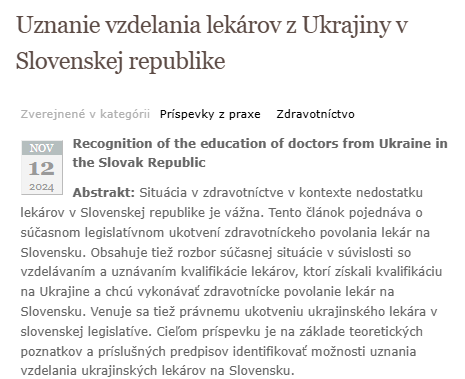
“Recognition of Medical Degrees from Ukraine in the Slovak Republic
The situation in the healthcare sector, particularly in light of the shortage of doctors in the Slovak Republic, is serious. This article examines the current legal framework governing the medical profession of “physician” in Slovakia. It also analyzes the current situation regarding the training and recognition of qualifications for physicians who obtained their qualifications in Ukraine and wish to practice medicine as physicians in Slovakia. The legal status of Ukrainian physicians under Slovak law is examined separately. The aim of this study is to determine, based on theoretical knowledge and relevant regulatory acts, the possibilities for recognizing the education of Ukrainian physicians in Slovakia.”
Source: ProHuman
This multi-pronged media pressure shifted the issue from individual grievances to the level of national healthcare security.
Historic Reform (March 2023)
The multi-year campaign succeeded in March 2023 when the Government of the Slovak Republic, led by acting Prime Minister and interim Minister of Health Eduard Heger, formally approved an expedited diploma recognition pathway for foreign pediatricians.
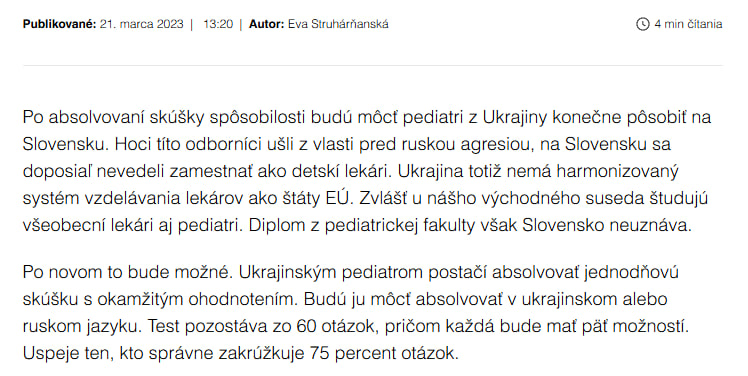
“After passing the qualifying exam, pediatricians from Ukraine will finally be able to work in Slovakia. Although these specialists fled their country to escape Russian aggression, they have not yet been able to find employment as pediatricians in Slovakia. The fact is that Ukraine’s medical education system is not harmonized in the same way as in EU countries. Specifically, in our eastern neighbor, general practitioners and pediatricians are trained separately. However, Slovakia does not recognize degrees from pediatric faculties.
Now this will become possible. Ukrainian pediatricians will only need to pass a one-day exam with immediate results. The exam can be taken in Ukrainian or Russian. The test consists of 60 questions, each with five possible answers. A candidate is considered to have passed if they answer 75 percent of the questions correctly.”
Source: Štandard
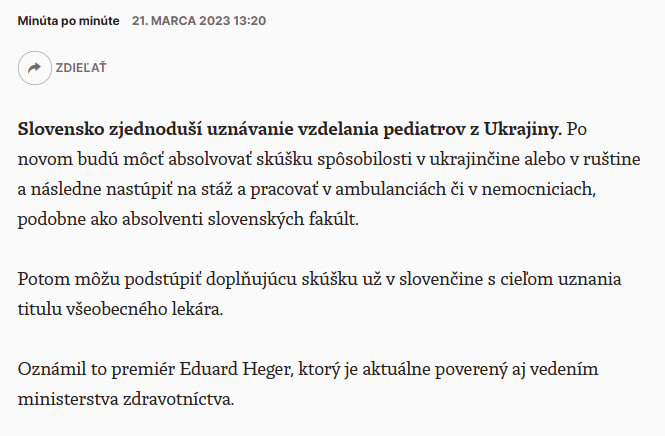
"Slovakia will simplify the recognition of pediatrician credentials from Ukraine. They will now be able to take the qualifying exam in Ukrainian or Russian, after which they can begin their residency and work in clinics or hospitals—just like graduates of Slovak medical schools.
They will then be able to take an additional exam in Slovak to have their general practice medical degree recognized.
This was announced by Prime Minister Eduard Heger, who is currently serving as acting Minister of Health.”
Source: Dennik N
The Ministry of Health of the Slovak Republic issued a formal decree:
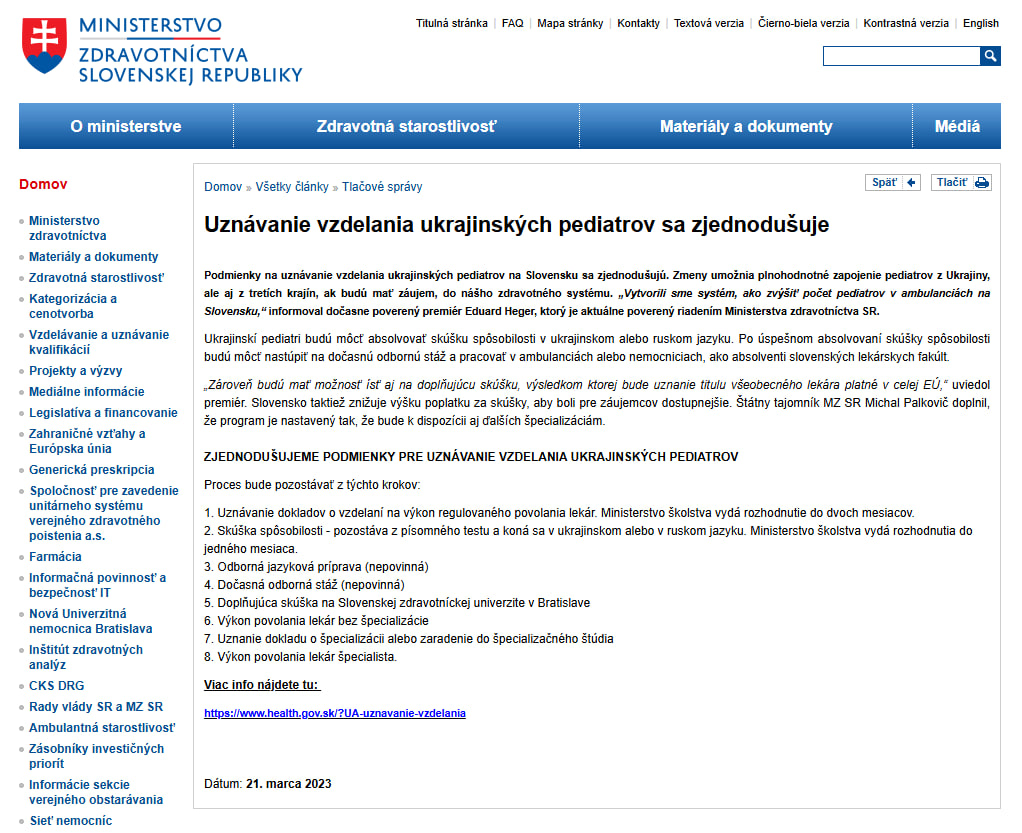
Источник: www.health.gov.sk
The breakthrough was also reported on Mediweb / HNonline and the official MALnS portal.
Key Regulatory Amendments
- Initial Language Sovereignty: Doctors gained the right to take the initial professional competence test (Skúška spôsobilosti) in Ukrainian, Russian, or English, drawn from an approved bank of 300 questions.
- Immediate Right to Work: Passing the competence test granted legal access to a temporary clinical internship (Dočasná odborná stáž) for up to 18 months under senior supervision, with full statutory compensation.
- Reduced Administrative Costs: The state fee for the supplementary examination (doplňujúca skúška) was reduced from €1,200 to €500.
As a direct result of the reform spearheaded by MALnS, Dr. Viktoriia Dmytruk validated her diploma and secured official authorization to practice in Slovakia. Today, she practices as a licensed pediatrician in Bratislava at a ProCare clinic, a partner of medinklud.
Beyond Dr. Dmytruk's personal journey, this case established a functional legal pathway through which dozens of foreign pediatricians have validated their degrees, taken positions across Slovak polyclinics, and helped address the country's severe pediatric shortage.
Beyond Dr. Dmytruk's personal journey, this case established a functional legal pathway through which dozens of foreign pediatricians have validated their degrees, taken positions across Slovak polyclinics, and helped address the country's severe pediatric shortage.
Standard Roadmap for a Foreign Pediatrician in Slovakia (Complete Step-by-Step Guide)
Today, the integration of a pediatrician from a third country follows a standardized administrative procedure overseen by the Ministry of Education, Research, Development and Youth of the Slovak Republic (MŠVVaM SR).
Step 1. Academic Diploma Recognition (Nostrification)
Submit a complete documentation dossier to the Centre for Recognition of Diplomas (SUDV) under the Ministry of Education.
You must submit an application if you wish to practice a regulated profession in the Slovak Republic and obtained your professional qualification (or part thereof) abroad.
The processing times for this type of application are as follows: medical professions—third countries: 2 months (+ 1 month for the recognition of professional qualifications after passing a supplementary exam) . The processing period begins on the date the Ministry receives the complete set of documents.
The outcome of the application review is a decision on the recognition of the educational credential for the practice of a regulated profession, which entitles the applicant to register to take a supplementary exam and complete a temporary professional internship (medical professions—third countries).
Paper documents may be submitted by mail or through the office of the Ministry of Education, Research, Development, and Youth of the Slovak Republic at the following address: Ministerstvo školstva, výskumu, vývoja a mládeže SR, Stredisko na uznávanie dokladov o vzdelaní, Černyševského 50, 851 01 Bratislava.
Fill out, print, and sign the application form—APPLICATION FOR RECOGNITION OF AN EDUCATIONAL DOCUMENT / PROFESSIONAL QUALIFICATION FOR THE PRACTICE OF A REGULATED PROFESSION - (ŽIADOSŤ O UZNANIE DOKLADU O VZDELANÍ / ODBORNEJ KVALIFIKÁCIE NA VÝKON REGULOVANÉHO POVOLANIA)
Required Enclosures:
- Power of attorney, if applying through an authorized representative (enter representative details under "Applicant", sign the document, and list the doctor's details under "Document Holder").
- Plain copy of identification document (and of the authorized representative, if applicable), plus a plain copy of temporary protection status or international protection documentation (if held).
- Certified copy of the diploma/educational credential (Apostille or consular superlegalization is not required upon initial submission, though may be requested at a later stage of the administrative proceeding).
- Certified copy of the diploma supplement or comprehensive academic transcript of coursework and completed examinations.
- Official sworn (court) translation of the documents referenced in points 3 and 4 (for documents in English, German, French, Russian, and Hungarian, self-translations are accepted).
- Translations are not required for documents issued in Czech.
- Plain copy of secondary school leaving certificate or proof of previous education.
- Proof of administrative fee payment (eKolok): €140 (Service code: 2090 — medical professions).
Step 2. Qualifying Exam
(Qualifying Exam for the Medical Profession: Pediatrician)
Preparation for and completion of a subject-specific written test consisting of 60 questions, written in accessible language.
The qualification exam (to assess professional aptitude) consists of a written test and is administered in Ukrainian or Russian.
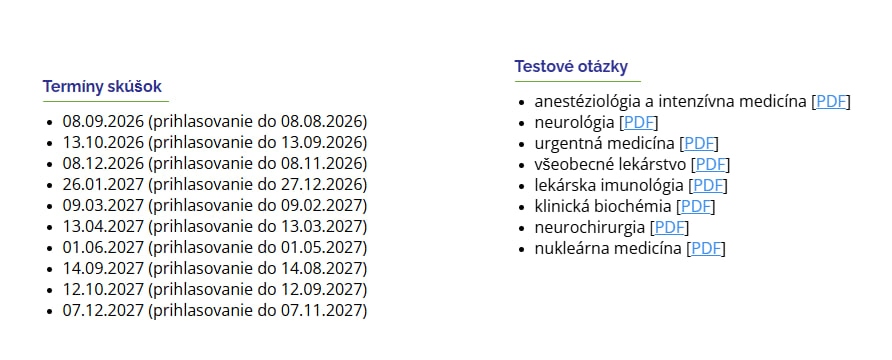
The examination syllabus covers the following medical fields:
- Anesthesiology and intensive care medicine (anestéziológia a intenzívna medicína)
- Neurology (neurológia)
- Emergency medicine (urgentná medicína)
- General internal medicine (všeobecné lekárstvo)
- Fundamentals of immunology (základy imunológie)
- Clinical biochemistry and laboratory diagnostics (klinická biochémia a laboratórna medicína)
- Neurosurgery (neurochirurgia)
- Nuclear medicine (nukleárna medicína)
No later than six months from the date of issuance of the “Decision on the Scheduling of the Qualifying Examination” (Rozhodnutie o uložení skúšky spôsobilosti), the applicant must submit an application to the Slovak Medical University in Bratislava to take the qualifying examination.
The candidate must complete and submit a written application, along with all attachments included in the document package, to the following address: Dekanát LF SZU, Limbová 12, 833 03 Bratislava – Skúška spôsobilosti.
The application must be typed in Latin characters—in block letters—to avoid discrepancies when translating from foreign languages.
Enclosures to the Exam Application
- a copy of an identity document,
- a copy of the “Decision on the Scheduling of the Qualification Exam” (Rozhodnutia o uložení skúšky spôsobilosti) from the Ministry of Education, Science, Research, and Sport of the Slovak Republic,
- proof of payment of the fee for services related to the administration of the qualification exam, in the amount of €200.
After your application and the attached documents have been reviewed, you will be notified of the date of the qualification exam.
Fee (charge)
Fee (payment) — 200 € to be transferred to the SZU (Slovak Medical University) account held at the State Treasury.
SWIFT/BIC: SPSRSKBA
IBAN: SK87 8180 0000 0070 0020 0522
Variable symbol: 1001008401
Specific symbol: date of birth in the format ddmmyy (day month year: example 150785, i.e., July 15, 1985)
After the qualifying exam is administered, the Slovak Medical University in Bratislava issues a certificate of passing the qualifying exam and forwards it to the Ministry of Education, Science, Research, and Sports of the Slovak Republic.
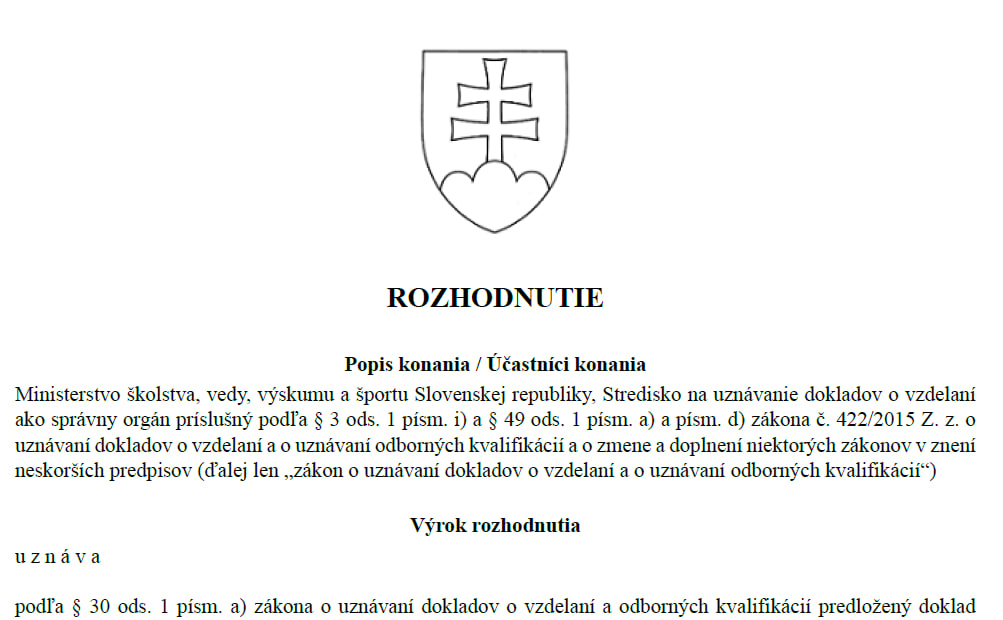
The Ministry of Education, Science, Research, and Sports of the Slovak Republic issues a “Decision on the Recognition of an Educational Document” within one month.
Step 3. Temporary Internship
(Dočasná odborná stáž)
Official employment at a clinic or hospital for up to 18 months, with legal status and official income.
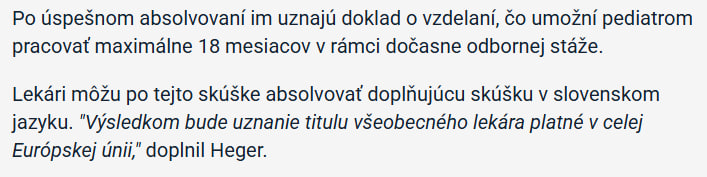
“After successfully passing the exam, their educational credentials will be recognized, allowing pediatricians to work for up to 18 months as part of a temporary professional internship.
After this exam, doctors can take an additional exam in the Slovak language. “The result will be the recognition of their general practice degree, valid throughout the European Union,” added Heger.”
Источник: Mediweb / HNonline
Step 4. Supplementary Exam and Full Autonomy
Pass the state exam in the Slovak language, register with the Slovak Medical Chamber (SLK), and obtain full medical licensure. From that point on, you can practice independently, without being tied to a sponsor, open your own practice, or serve as a sponsor at several clinics.
It is important to emphasize
Although medinklud is an active member of the nonprofit organization MALnS and shares its social goals, medinklud is a for-profit consulting firm. In order to be able to:
This guarantees doctors expert protection, saves time, and minimizes bureaucratic risks at every stage.
- provide healthcare professionals with high-quality services,
- engage specialized lawyers, translators, and methodologists,
- and financially support and scale up community initiatives, free courses, and field trips for young medical professionals,
This guarantees doctors expert protection, saves time, and minimizes bureaucratic risks at every stage.
Professional Ethics: Dialogue Is More Effective Than Rumors
At medinklud, we constantly follow the journeys of foreign medical professionals, whether they were our clients or went through this process on their own.
We empathize with medical professionals who don’t pass their supplementary exam on the first try, or whose adjustment to a new country is more difficult or doesn’t go as smoothly as they’d like. And we sincerely rejoice in their successes: we happily like posts and photos celebrating a successfully passed exam, a new job, or a family trip. After all, our overarching goal is a strong and united community of doctors and medical professionals in the European Union who have chosen medicine as their calling, not just a profession.
And that is precisely why we are genuinely disheartened by situations where certain colleagues, instead of engaging in transparent communication and directly addressing the problem at hand, choose to spread rumors and unfounded claims on social media.
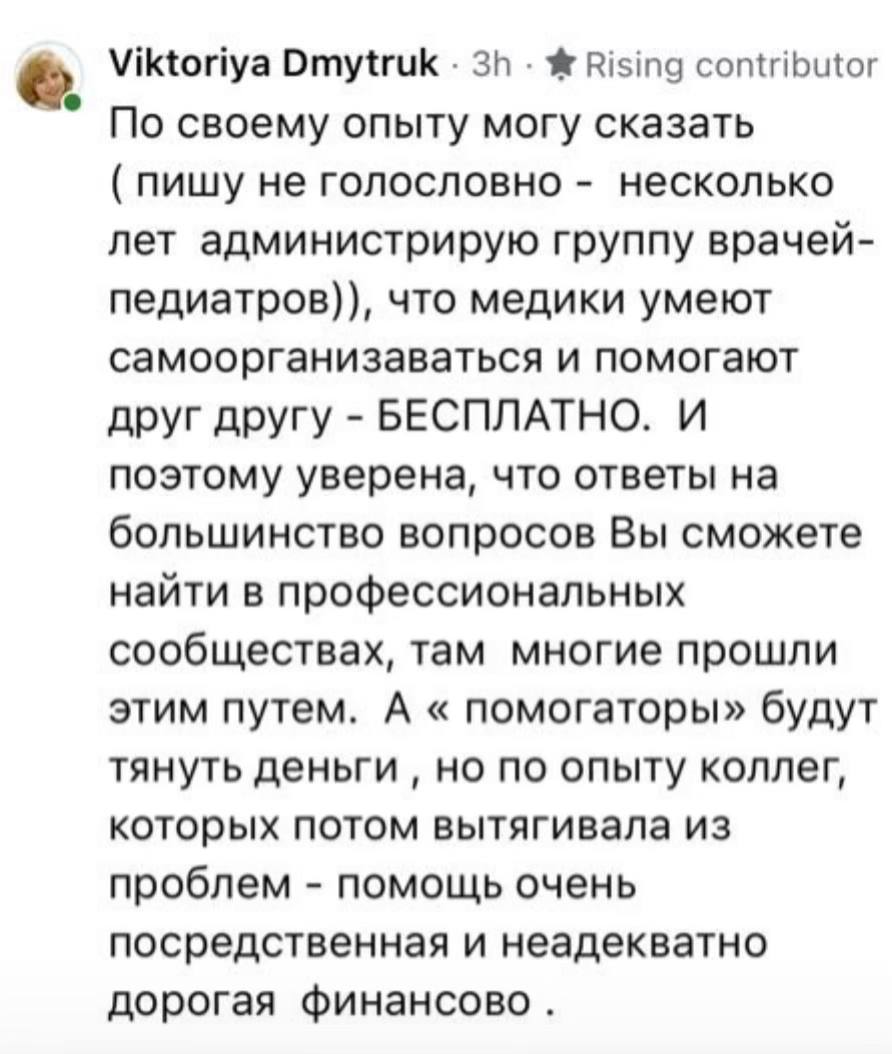
From my own experience, I can say (and I'm not speaking unfounded here—I've been administering a group of pediatricians for several years) that medical professionals know how to self-organize and help each other for FREE. That is why I am certain you will be able to find answers to most of your questions in professional communities; many there have walked this path before. Meanwhile, "paid helpers" will just drain your money, but going by the experience of colleagues whom I later had to bail out of trouble, the assistance provided is very mediocre and unreasonably expensive.©Viktoriya Dmytruk
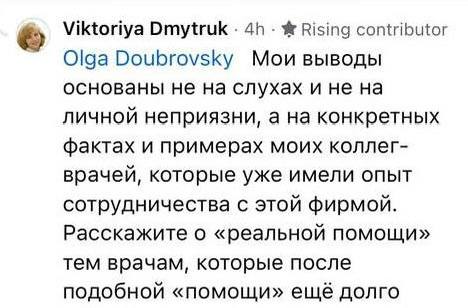
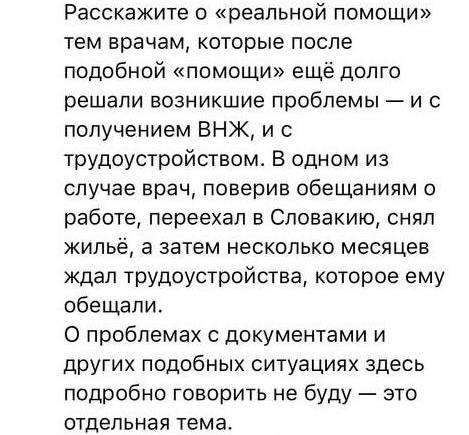
Olga Doubrovsky, my conclusions are based neither on rumors nor on personal animosity, but on concrete facts and examples from my fellow physicians who already have experience working with this firm. Go ahead and tell those doctors about "real help"—the ones who, after such "help," spent a long time untangling the resulting messes with both obtaining residence permits and getting employed. In one instance, a doctor took their promises of employment at face value, relocated to Slovakia, rented an apartment, and then waited months for the job they were promised.
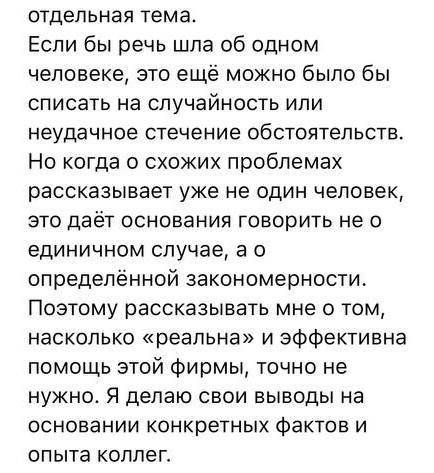
I won't go into detail here about the document issues and other similar situations—that is a separate topic entirely. If this were about just one person, it could still be written off as a coincidence or an unfortunate stroke of bad luck. But when multiple people recount similar ordeals, it gives solid grounds to speak not of an isolated incident, but of a distinct pattern. So there is definitely no need to lecture me on how "real" and effective this firm's help is. I draw my conclusions based on concrete facts and the firsthand experiences of my colleagues.©Viktoriya Dmytruk
According to our information, medinklud currently has no pending or unresolved claims, lawsuits, or legal disputes. If any of our colleagues have questions or concerns about our work, our office is always open. We encourage you to contact us directly and resolve any issues in a civilized manner, rather than resorting to rumors and gossip.
We want to grow and develop alongside professionals who support one another, communicate openly, and resolve issues in a humane way.